
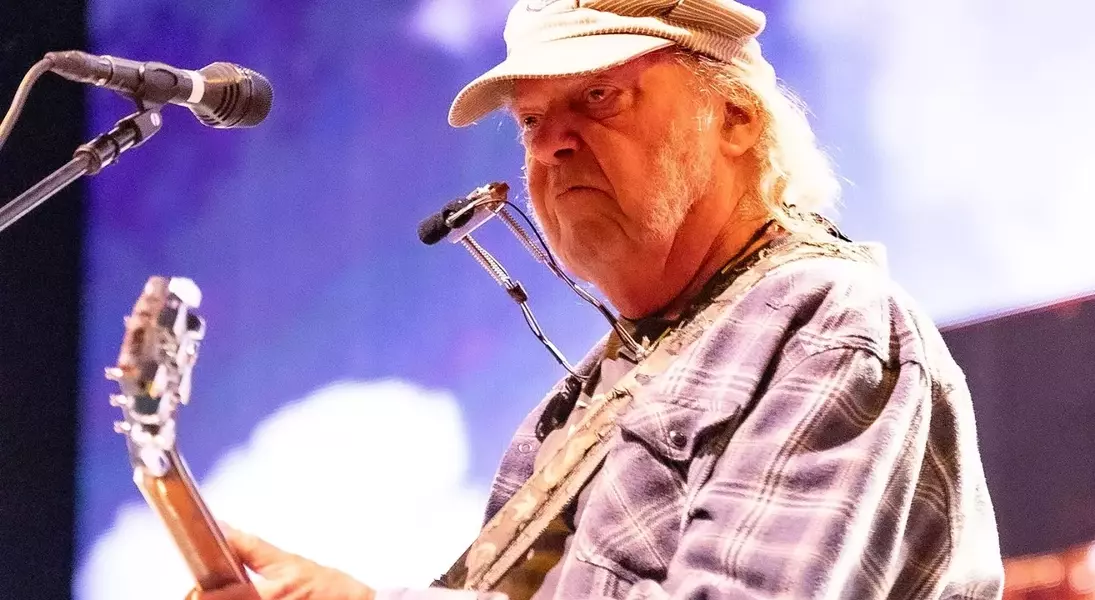
Since its inception in 1989, Neil Young's iconic track "Rockin' in the Free World" has evolved from a specific political commentary into a universally recognized anthem of protest and freedom. The song was conceived during a period of geopolitical shifts, drawing inspiration from a canceled cultural exchange with the Soviet Union. Its original lyrics wove in direct references to American political discourse of the late 1980s, including then-President George H.W. Bush's "thousand points of light" and Jesse Jackson's campaign slogan, reflecting the era's socio-political climate. Despite its precise historical roots, the song's themes of liberty and critique of societal shortcomings have allowed it to maintain profound relevance over time. This adaptability has seen it covered by numerous artists across various musical spectrums, each bringing their unique interpretation while preserving its core message.
The enduring power of "Rockin' in the Free World" is further underscored by its continued presence in contemporary music and political movements. Artists repeatedly turn to the song, particularly during times of perceived governmental or social unrest, demonstrating its persistent ability to articulate widespread sentiment. Its timeless quality has enabled it to resonate with new generations and diverse audiences, transforming it into more than just a song—it's a symbol. This article delves into the song's fascinating journey, examining its genesis, initial impact, and the myriad ways it has been reimagined and revitalized by various musicians throughout the years, cementing its status as a rock and roll classic with a vital, ever-current message.
The Genesis and Enduring Relevance of a Protest Anthem
Neil Young's "Rockin' in the Free World" originated from an unexpected conversation during his 1989 tour with the Restless. A proposed cultural exchange with the Soviet Union failed, prompting guitarist Frank "Poncho" Sampedro to remark, "I guess we'll have to keep on rockin' in the free world." This spontaneous phrase sparked Young's creative process, leading to the song's debut just days later in Seattle. The lyrics directly address the political landscape of the late 1980s, weaving in references to George H.W. Bush's speeches, Jesse Jackson's presidential campaign, and the complex relationship between the U.S. and Iran. This contextual embedding made it an immediate and potent commentary on its time.
However, the song quickly transcended its specific origins, becoming a broader anthem featured on Young's 1989 album, Freedom. Its themes of social disillusionment and a call for vigilance resonated deeply, leading to its widespread adoption by other musicians. From Pearl Jam to Van Halen, artists across genres incorporated the song into their live sets, underscoring its growing status as a timeless rock staple. The track's ability to adapt to changing political climates, serving as a backdrop for various expressions of discontent, solidified its place as a significant piece of musical and cultural commentary, proving that its message extends far beyond its initial inspiration.
Diverse Interpretations: A Song for Every Era
The power of "Rockin' in the Free World" lies in its incredible versatility, allowing artists to infuse it with their unique energy and perspectives while retaining its core message. In recent weeks alone, several notable artists have performed the song, each offering a distinct rendition. Roger Daltrey, on his solo tour, delivered a more aggressive and biting version, emphasizing his belief that the song needed more anger. This interpretation, while critiquing Young's vocal style, inadvertently highlighted the song's capacity for raw, passionate delivery. Just a day after Daltrey's comments, Neil Young himself, performing with the Chrome Hearts at Farm Aid, responded with a fiercely energetic performance, incorporating a "Take America Back!" refrain and dramatically breaking his guitar strings, demonstrating his own enduring fury and commitment to the song's protest spirit.
Beyond Daltrey and Young, other significant covers showcase the song's enduring appeal. Pearl Jam, a band deeply influenced by Young, frequently performs the track, often bringing guest musicians like Billy Strings to add new layers to their energetic renditions. Lucinda Williams has made the song a consistent highlight of her concerts for over a decade, integrating it seamlessly into her distinctive live experience. Collective performances, such as the all-star collaboration at the Power to the People Festival featuring Bruce Springsteen, Dave Grohl, and Dave Matthews, further illustrate its unifying power. Dave Matthews even contributed a new verse, expanding the song's social commentary to include contemporary issues like economic inequality and school shootings. Flashback performances from artists like Van Halen, Patti Smith, Stephen Stills, and even a surprise appearance by Paul McCartney underscore the track's broad appeal and its remarkable ability to resonate with diverse audiences and generations, cementing its status as a timeless and adaptable anthem.